
Garage and workshop cable management with magnetic mounts
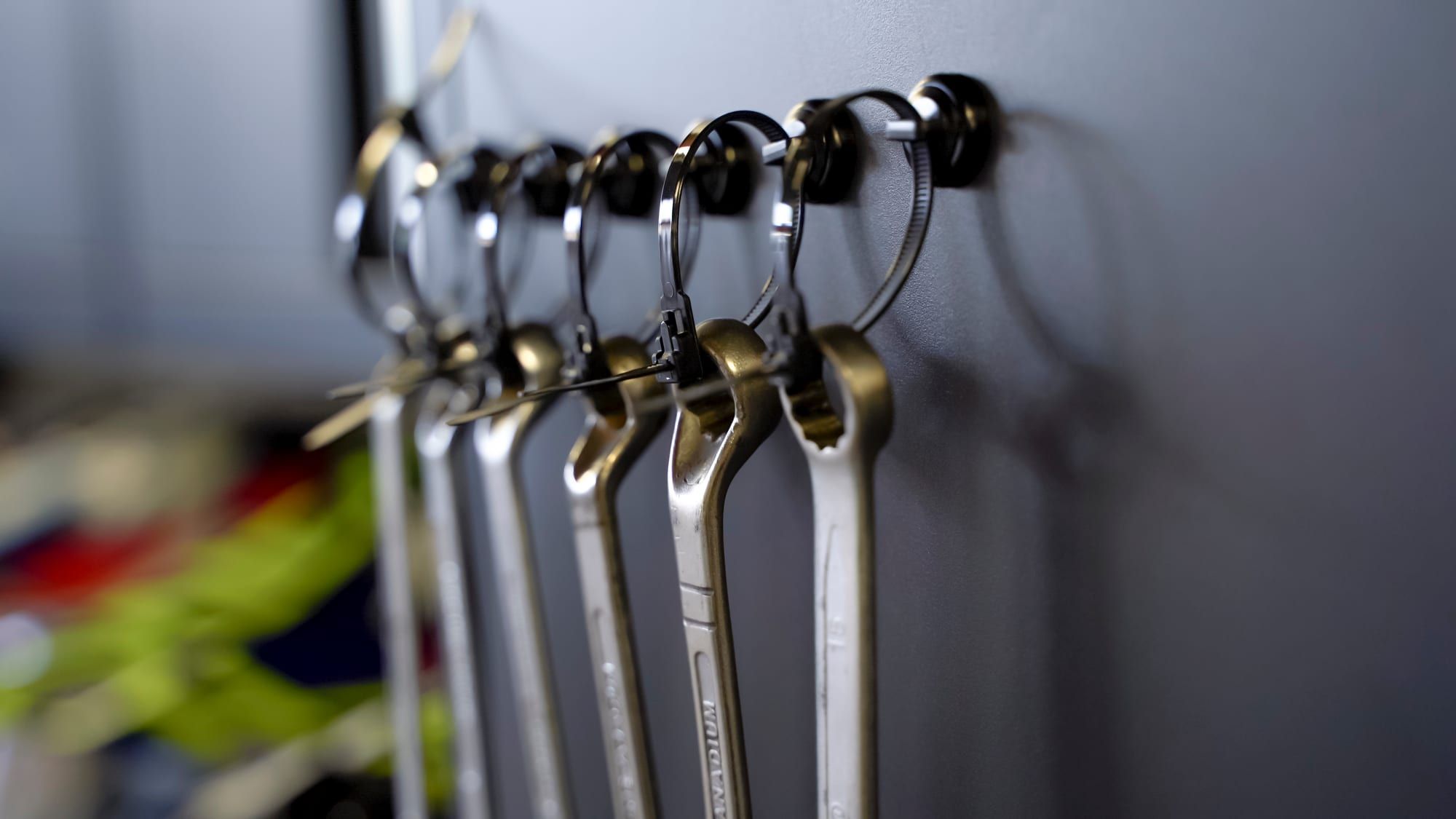
Cords across a garage floor get run over, tripped on and tangled. Most garages already have plenty of steel to hang them from: shelving uprights, workbench frames, tool chests and beams. Magnetic mounts let you use it without drilling a single hole, and move everything when the layout changes.
Step 1: List what needs a home
Walk the garage and write down every cable: extension cords, shop lights, battery chargers, the air compressor cord, the radio, the freezer. Note where each one starts (the outlet) and where it needs to get to.
Step 2: Find the steel
Check each surface with a fridge magnet. Common places that work:
- Steel shelving uprights and shelf edges
- Workbench legs and frames
- Rolling tool chests and cabinets
- Steel beams and columns
- Metal pegboard and steel wall panels
- The sides of a fridge or chest freezer
Avoid moving parts. Don’t attach cables to garage door tracks, rollers, springs or the opener rail.
Step 3: Plan routes off the floor
Aim to run cables up from the outlet and along steel at bench height or above, then down only where they’re used. A cable that stays off the floor can’t be run over by the car or the lawn mower.
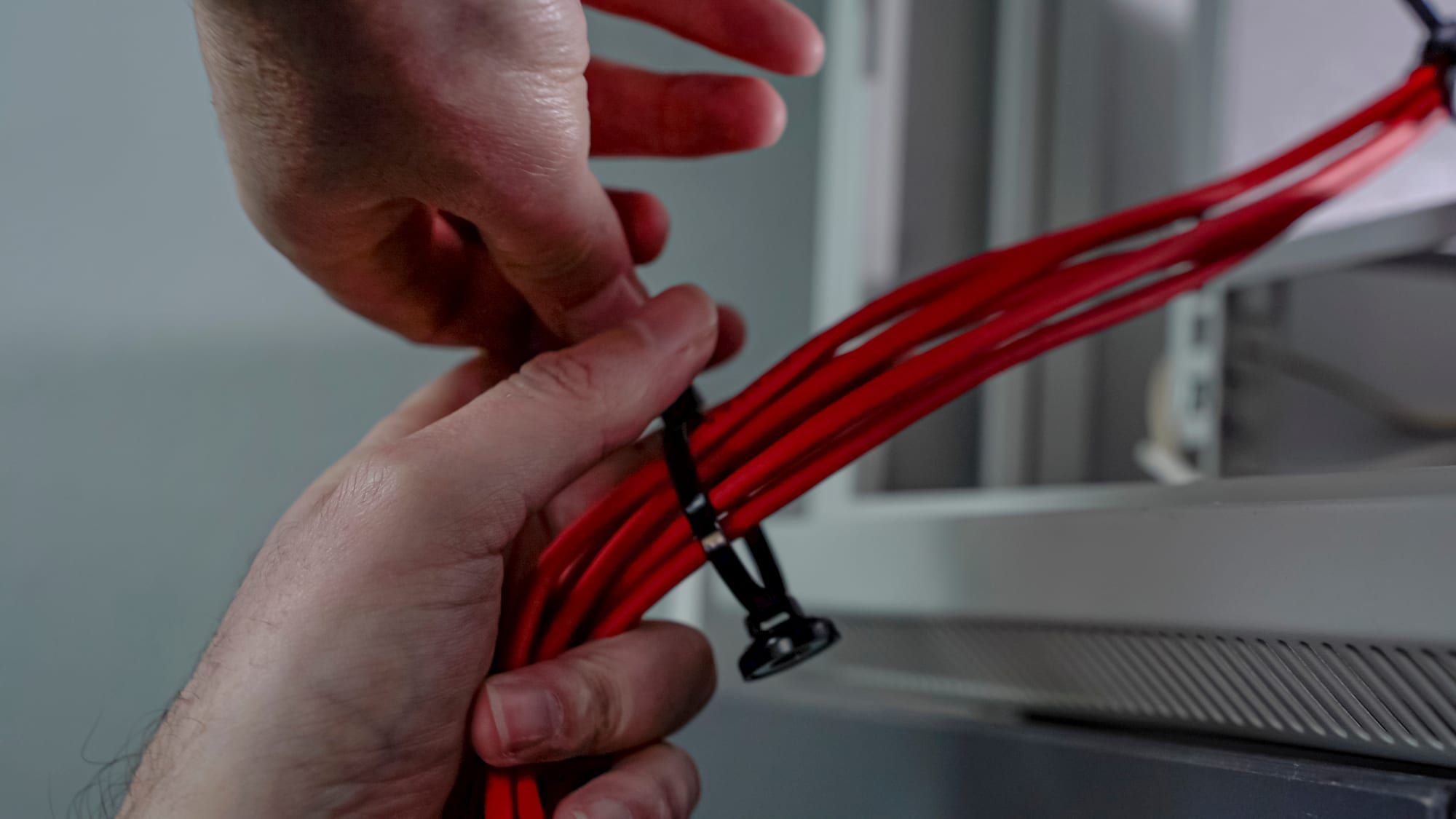
Step 4: Mount and tie
- Snap a mount onto the steel near the outlet.
- Run the cable through the zip tie and pull it snug, not tight. Over-tightening can pinch the insulation.
- Add a mount every foot or two along the route, and one on each side of any corner.
- On vertical runs, use more mounts and let the cable hang in short loops rather than one long drop.
- Group cables going the same way into one bundle per mount.
Step 5: Make it easy to change
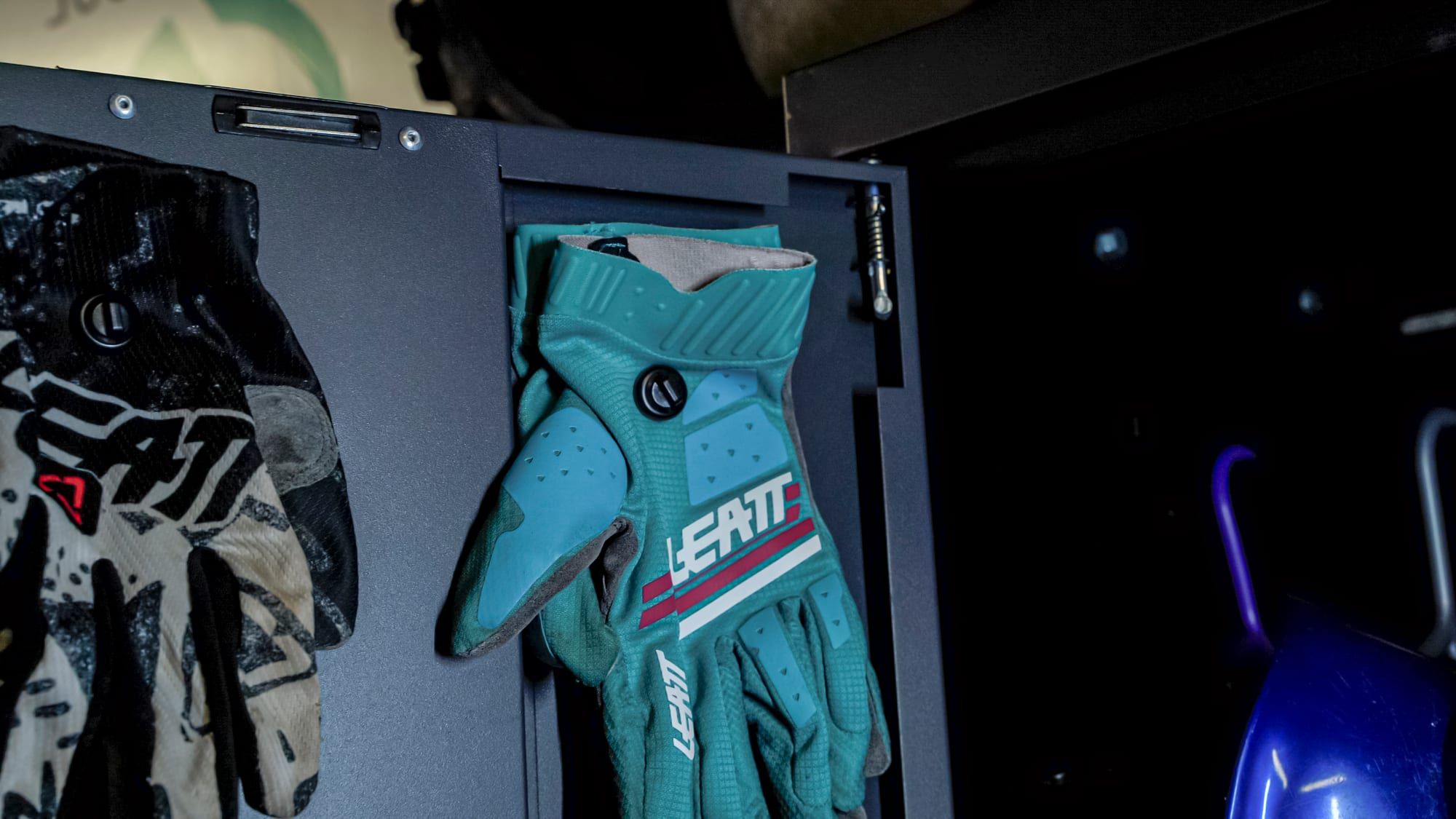
The point of magnets is that nothing is permanent. When you move a bench or add a charger, lift the mounts off and put them where they’re needed. Lift rather than slide them across painted surfaces to avoid scuffs.
Safety notes
- Extension cords are meant for temporary use. If a cord has become permanent, consider having an electrician add an outlet.
- Keep cords away from heaters, welding areas and anything that gets hot.
- Don’t bundle a cord that’s coiled on a reel under heavy load, and don’t run cords under rugs or mats.
- Check cords for damage when you re-route them.